

The Practice: The vine doesn't announce

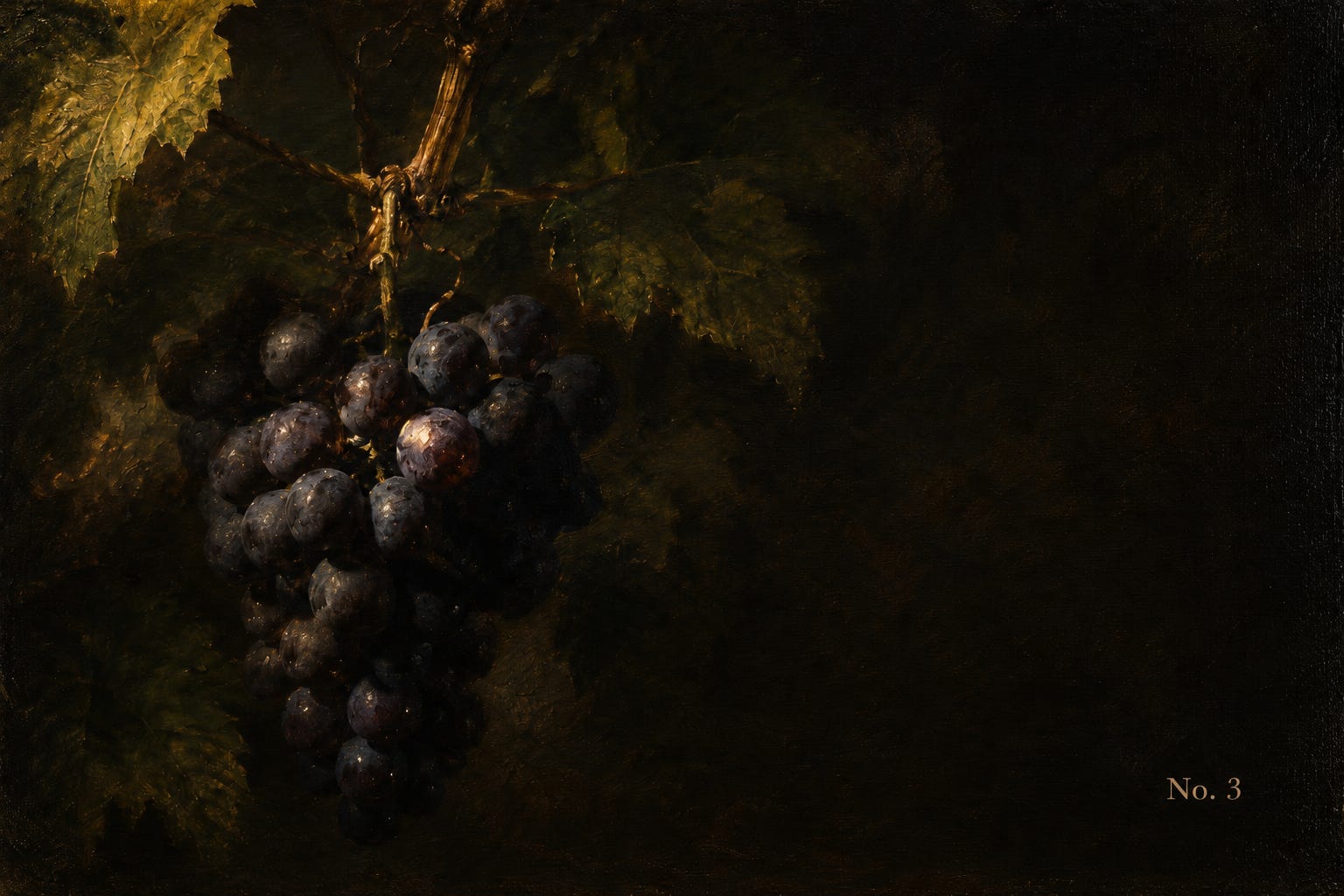
Marcus Aurelius, Meditations 5.6, in Gregory Hays' translation. The man who has done a good thing, Marcus writes, "does not call out for others to come and see, but goes on to another act, as a vine goes on to produce again the grapes in season."
The vine image gets read as modesty advice, but Marcus is after something more structural: the good act is supposed to be complete in itself. The moment it needs witnesses, it has started working for a different employer. Grapes don't check who's watching.
The drill
One good act a day this week that nobody can find out about. Small counts: the mess cleared that isn't yours, the recommendation sent without copying anyone in, the thing put right silently. The act is the easy half. The real rep is afterwards: notice the urge to mention it, even sideways, even days later as a humble aside.
Don't judge the urge. Just count how many times it knocks. For most of us that is more often than we would expect, and the count is the real find.
From the studio
This week I put up a new one for the mornings: a short guided run of Stoic affirmations drawn straight from Marcus, the same voice you just read, eight lines to set the day by.
Fitting company for this week's theme, since Marcus wrote most of his to no audience but himself.
Hit reply with what you did. I'm joking.
Don't.
Go well,
Jon